Experienced defence for impaired driving, dangerous driving and other serious driving allegations.
Driving Charges Often Arise in Fast-Moving Situations
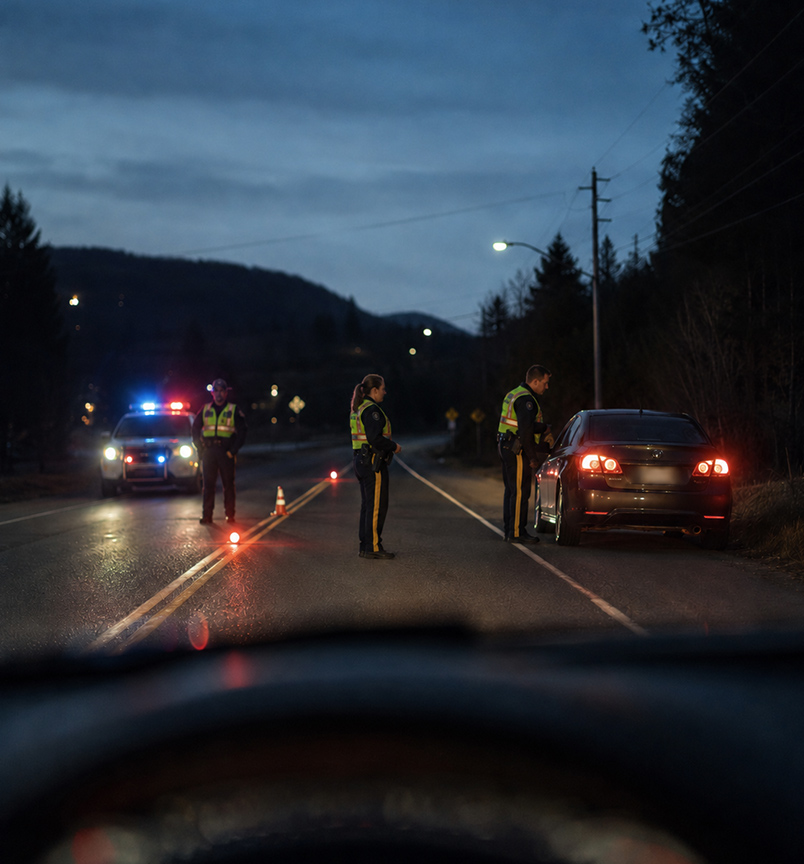
Impaired driving and dangerous driving allegations often arise from roadside stops, collisions, 911 calls, and interactions where officers must make rapid decisions under pressure. These charges can bring immediate and long-term consequences, including driving prohibitions, vehicle impoundment, insurance impacts, a criminal record, and the possibility of jail in more serious cases.
Despite the urgency of these investigations, the Crown must still prove each element of the offence beyond a reasonable doubt and police must respect Charter rights throughout the process. Because these cases unfold quickly, police mistakes can affect the admissibility of breath samples, statements, observations, or other evidence.

Crown Counsel Are Often Constrained by Policy
Driving offences are governed by Crown policies that can limit how prosecutors resolve cases. Those policies may restrict plea negotiations, require supervisory approval for certain resolutions, or set standard positions in impaired driving files involving breath samples, collisions, or prior history.
As a result, Crown Counsel may not always have the discretion an accused person expects. However, the policies can also contain exceptions.
Weaknesses in the evidence, Charter issues, compelling circumstances, or fairness concerns may create room for a more favourable resolution. Understanding how these policies operate in practice can be critical to effective negotiation.
A Defence Strategy Built Around Your Circumstances
Driving allegations require a defence strategy tailored to the facts. Some cases call for challenging the admissibility of evidence. Others turn on witness observations, identity, the context of the driving, the grounds for the stop, roadside testing, the collection of samples, or the admissibility of statements.
In some situations, negotiation or an alternative resolution may be appropriate. In others, a trial or Charter voir dire is necessary to test the evidence properly.
At Jensen Law, we identify the strengths and weaknesses of the case, explain the realistic outcomes, and build the strategy around the circumstances rather than treating every driving charge the same way.